Dear Fellows, welcome to Berlin!
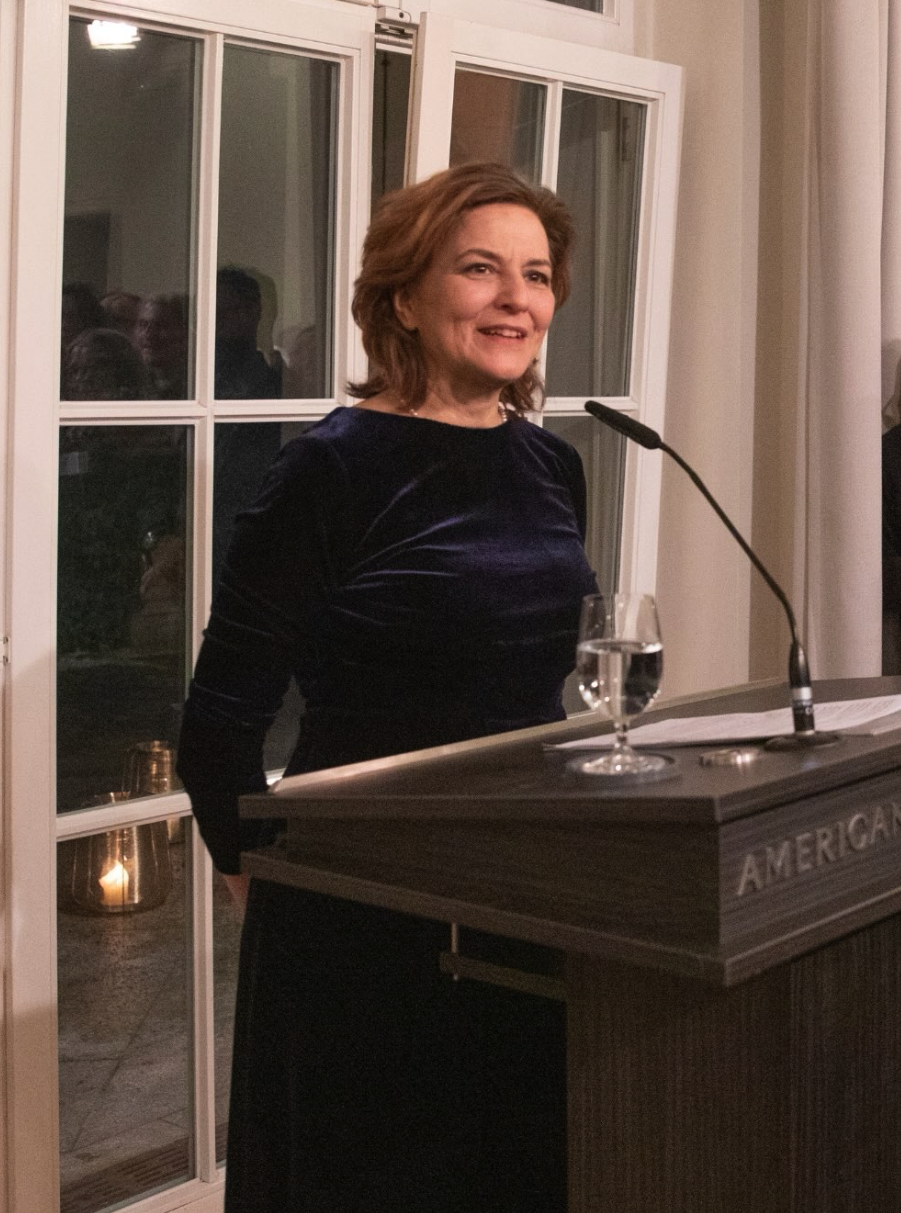
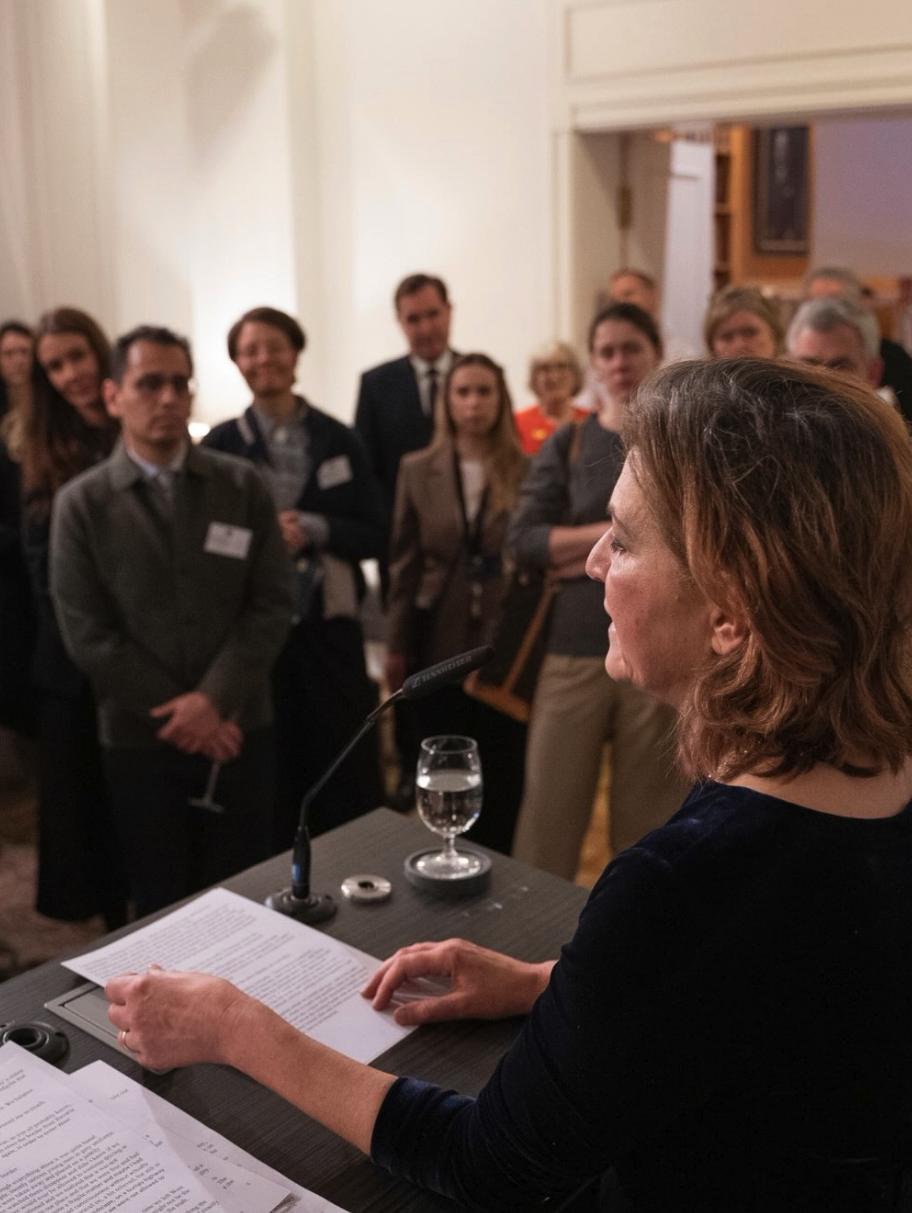
Am 28. Januar habe ich für die neuen Fellows der The American Academy in Berlin die key note speech gehalten.
Hier mein Rede auf Englisch (weiter unten auf Deutsch):
Dear ladies and gentlemen,
Thank you for inviting me here.
I’m grateful for the opportunity to speak with you today.
Dear Fellows, welcome to Berlin!
Many of you are engaged in creative work in a field, that cannot and should not be contained by borders. You`re exploring, both geographically and intellectually.
I grew up with fairy tales: primal narratives, that expanded my horizon and sharpened my awareness for transformation and enchanted places; they spoke to me of destructive forces that cannot be reasoned with and helped me to understand the incomprehensible.
And then one day, the wondrous world of Walt Disney entered our german children’s rooms and our imagination drifted into other dimensions.
I remember a precious picture book - it was the story of Mary Poppins - and there was an image that particularly fascinated me.
It shows Mary Poppins and the children as they visit the street artist Bert on a grey, unfriendly, very boring day, and Bert has just finished a colorful picture in chalk on the pavement: it shows a beautiful shimmering landscape, a bright carousel in the distance. The children stand there - bewitched - and admire it. And so Mary Poppins takes them by the hand - and of course Bert as well - and she tells them to close their eyes – and with no hesitation they leap straight into the picture, and when they open their eyes again, they find themselves inside the vibrant landscape.
A painted piece of art, a work of imagination, became reality. It turned into a place you can step on. A place, where most likely something unknown will happen, something unpredictable – yet unmistakably exciting –. And the little group is transformed as well: they wear marvelous clothes and they feel good about themselves, because they know for sure, that nothing can ever go wrong and they are sheltered and cared for by someone who knows the way through.
What had fascinated me so deeply about this image, was the fact, that the boundary between reality and imagination – which as a child appeared to me an impassable threshold – was overcome.
(And in the simplest way of all: you just take each other by the hand, close your eyes, and jump!)
In a way, this vision seems to have manifested in my life.
When I chose this profession, my decision might have been driven – at least to a certain extent - by the desire to unite those two worlds. Because as an actress, I move permanently along the boundary between reality and imagination.
Usually, my work begins with the script, which is actually nothing but plain white paper covered in black letters. And it’s my faculty of imagination, that transforms those marks into a living human being.
I return to the text again and again, hundreds of times, even when I already know it, until finally the obvious meanings dissolve – predictable conclusions, simplifying observations and stereotypes just fall away until the text is no longer the totality, but only the surface – the tip of the iceberg. And now my imagination begins to unfold and I let it move around playfully and with absolute freedom. Through repetition, my mind penetrates the layers and finds a way into the human character. Its as if I find a road that takes me across the devide, and little by little, something else appears: the actual nature of the person.
It is now a complex, multifaceted, contradictory human being.
There is another tool essential for my work: my own innate reality – my body.
Ideally its in good shape and always available to me so that I can become what I imagine. My body transforms the imaginary into reality. It gives the mental work a form. And during the performance, my presence hovers between the reality of my body – that is what I actually do - and my imagination. And its because of that, that I can credibly convey other worlds.
This is especially striking while working on a film.
Normally, right before a take, there is a lot of preparation, a great flourish of activity: lights are adjusted, final touches are made. And then suddenly there is silence, camera begins to roll, the clapperboard snaps shut, “action” is called and a moment later, I push off and jump right into the picture, right into the other reality.
From one second to the next, I have a different life. The room I`m standing in is still the same, but simultaneously I am in a bourgois apartment in East Berlin. The time is Now, but simultaneously it is a summerday in 1981. I am myself and at the same time I am Christa Maria, a completely different person.
Reality and imagination have merged. And perhaps this is one of humanity’s oldest dreams, that we can step out of what is given and into what is possible. Maybe that is why it makes us happy, when it comes true.
The boundary between imagination and reality is where artists live. We balance there. We play around it. And if all goes well, we dance on it.
Possibly this childhood image of crossing borders also impressed me so much, because it mirrored the reality of my own life at the time.
We had moved from Bavaria to West Berlin, which was, as you all probably know, surrounded by the wall. And to get there, we had to cross the border from Bavaria to East Germany, and then after a 4-hour drive, again, in order to enter West Berlin.
And here for the first time I crossed a real border.
To me it was life-threatening, even though everything about it was quite banal.
There was a low wall, very few people, mostly serious young men in grey uniforms who scrutinized us. Our passports were taken away and placed on a jankily constructed conveyor belt and we watched them disappear and didn`t know if we would ever see them again and if we would ever be allowed to continue driving at all. All at once, our identity was questioned and we realized that it was not guaranteed, that the place we lived in was our place and that we were free and had the right to be there. The whole thing was quite a fragile matter and maybe I had done something wrong – in any case I had a bad consciousness without actually knowing why. Then, usually we were allowed to travel on, a bit relieved, but still in a state of tension, intensified by the monotonous landscape, on a bumpy highway that we were absolutely prohibited from exiting, since we were not allowed to enter eastgerman roads.
From then on, this experience was part of our DNA and every time we left West Berlin or returned to it, this abyss opened again: that our reality might not be the real reality, things were possibly very different and we didn`t know the truth.
Later, we sometimes stood on wooden platforms built for that purpose along the wall, using a large telescope to look across into the other world that looked exactly like ours. And just as in the earlier fairy tales, my horizon opened up.
I saw buildings, floating in unreality – which mirrored our own, and yet were otherworldly. The street we stood on continued on the far side, like a reflection made nebulous by our bewilderment. Through the telescope I saw the wall, which was actually two walls and between them the Todesstreifen, the deathstrip, hundreds of yards wide, no-mans-land made out of raked sand, so that every footprint would betray itself, mines and tank barriers placed throughout. And just like in our fairytales: The silence and the banality of what we saw revealed a destructiveness impervious to the human mind – and it could not be reasoned with.
In astonishment we stood still. But looking through the telescope did not bring the incomprehensible any closer.
Cause this was not a fairy tale. This was our reality, it was part of my life.
This was my country – divided by a border, that could not be surmounted.
It was true, in West Berlin during the 1970s and 80s, the border was the bitter condition of our daily life, the wall encircled our city, we were guarded, we didn’t know our East German compatriots, we were locked in – and, as island existences tend to be - locked out at the same time.
But on the other hand, and maybe for the same reasons, we were free.
The city was enigmatic, it was changing constantly. There was no compulsory military service in contrast to the rest of Germany, there was no curfew, and West Berlin became a city that never sleeps. there was enough space; time was irrelevant. there was no pressure; if anything, there was self-realization and seeking and finding love. We lived in our own world. A world we created for ourselves with every imaginative faculty we had. Our life in this part of the city was marked by a kind of floating freedom – it was sensual, carefree, perhaps even irresponsibly light.
So there was the harsh reality against which we closed our eyes - and at the same time we led an insular existence, where so much was possible, cause no one looked too closely, and which had changed into a place where daydreams happily settled down. It was as if we wanted to defeat the existing border with an unbounded life.
And bitter fights erupted against federal rules and moral restrictions.
Borders, that much was clear, had to be breached.
I grew older in this divided city, in the divided country, and here I also grew into my profession. On East German maps, West Berlin was a blank white field, a blind spot. In turn, we in the West were blind to the communist part of the country – blind, because we didn’t know how people lived there, how people would think, what kind of country it was. Living in immediate proximity, side by side, speaking the same language, we knew nothing of each other, whatshowever, less than we knew of any other country. Two different worlds shared the same time and space without ever touching. And we didn`t realize the enormity – and also the sadness – of this condition, because we had lived with the wall from childhood onward. We did not realize, that it had become part of our lives to close our eyes to an elementary reality, and to close our eyes specifically, to the reality of the wall, to block it out.
The boundary between imagination and reality – we balance on it. We play around it. And if things go really well, we dance on it.
And yes – in the end, we danced on it, in real life, we danced on our border. It was an exquisite, extraordinary moment when the wall came down. And the image of people dancing on the Berlin Wall was for us far beyond imagination. It will forever stay in our minds, a magnificent sign of confidence.
For many people in the East, the West they couldn`t enter, had become the land of dreams: a country full of promise, a place they longed for. They hoped it would offer them relief, happiness and that it would transform them.
We in the west however became only fully aware of the wall, when it was gone. and we were far from understanding, what it had meant; that we started to realize, when we first saw people from the other side. When we met for the first time. When we recognized how different we were – and that, even though we were supposed to belong to eachother we might not fit together at all.
So unfortunately there was little understanding for the other side. And there was no understanding at all for the pain and sadness the Easterners experienced – as for them, the collapse of the wall meant a comprehensive loss: the disappearance of their everyday world. A system that was destined to last forever, for better or worse, was erased within weeks and months. Today, more than thirty years later, that past – and the memory of it – seems to have vanished completely. Apart from the little blinking man in the pedestrian signal in the eastern part of the city, there is not much left of former GDR. And the old shining West Berlin, too, only flickers here and there. To this day we try to come to terms with this. To this day this rift affects our lifes.
And even today the question remains: Who are we? How do we connect? Who can we become? The break in identity – the scar that now fills the place where the wall once stood – still exists. And this time we should accept it, and not again pretend it`s not there. Our eyes should be open now.
Geben Sie Gedankenfreiheit Sire! “Give freedom of thought, Sire!
This line from Friedrich Schiller’s drama Don Carlos, was written in 1783, and it became a symbol in the struggle against repression and censorship.
Mental walls must be dismantled. That is our responsibility in political times.
And we are always living in political times.
Geben Sie Gedankenfreiheit, Sire! Freedom of thought is the freedom people fought for over centuries. And this freedom includes the right to express ones thoughts and the right to stand up for it in person without being harmed.
Here in Germany, this right has been part of our existence since the end of the Second World War. And it’s our most precious possession. In that matter we learned a lot from America. The American spirit has always enlightened and enriched our lives.
A major rupture is happening in the United States and the eyes of the world are watching. America – land of the free – that’s how the world has looked upon this country until now.
Now that this freedom is being threatened, you may see your country with different eyes. With the stark division among the populace, you might also see your home as something incomprehensible, beyond reason, otherworldly.
It may not be possible to close our eyes and leap into a fantasy world – but it’s not too late to preserve the American spirit of freedom.
May we succeed in keeping our borders permeable, in remaining open to one. another, in creating a world that is not governed by the law of the strongest and that we can shape together freely.
Keynote Speech für die Fellows der American Academy am 28.1.2026
Sehr geehrte Damen und Herren,
danke für die Einladung.
Ich freue mich, heute zu Ihnen sprechen zu dürfen.
Liebe Fellows, herzlich Willkommen in Berlin.
Die meisten von Ihnen sind in kreativen Berufen tätig, die nicht an Grenzen gebunden sind. Sie bewegen sich in anderen Welten, geografisch gesehen, und auch in geistiger Hinsicht.
Ich bin mit Märchen aufgewachsen, mit Urgeschichten, die meine Wirklichkeit erweiterten, mein Bewusstsein für Verwandlung und verwunschene Orte schärften, die vom Zerstörerischen erzählten, das durch menschliches Denken nicht aufzuhalten ist und die mir das Unbegreifliche nahebrachten.
Eines Tages dann aber erreichte endlich auch unsere Kinderstuben die wunderbare Welt des Walt Disney und katapultierte unsere Vorstellungswelt in eine andere Dimension.
Ich kam in den Besitz eines kostbaren kleinen Bilderbuches: Es war die Geschichte von Mary Poppins. Und ich möchte Ihnen von einem Bild erzählen, das mich besonders faszinierte: Auf diesem Bild sieht man MP, die an einem grauen unfreundlichen und langweiligen Tag mit den Kindern den Strassenmaler Bert besucht. Er hat gerade ein wunderschönes Kreidebild, eine farbenfrohe traumhafte Landschaft gemalt, und die Kinder stehen begeistert vor dem Bild, ein buntes Karussell ist in der Ferne zu sehen, und bewundern es. Und da nimmt MP die Kinder - und natürlich auch Bert - bei der Hand, sagt ihnen, sie sollen die Augen schliessen und – dann springen sie mitten hinein in das Bild und als sie die Augen wieder öffnen, sind sie mittendrin in dieser bunten Landschaft. Das gemalte Strassenbild, der Ort der Phantasie, ist Wirklichkeit geworden. Er ist plötzlich ein Ort, den man betreten kann und in dem Ungeahntes, Unvorhersehbares, in jedem Fall aber sehr Aufregendes passieren wird. Und auch sie selbst sind verwandelt, zauberhaft gekleidet und sie sind glücklich, nichts kann schiefgehen, da sie begleitet und behütet sind, falls etwas Gefährliches passieren sollte.
Was mich damals als Kind so fasziniert hat an diesem Bild ist, dass hier die Grenze zwischen Wirklichkeit und Phantasie, eine Grenze, die mir als Kind unauflösbar schien – überwunden wird. (Und zwar auf die allereinfachste Weise: Indem man sich an der Hand nimmt, die Augen schliesst und springt! )
Diese Vision, so scheint es mir manchmal, hat sich dann manifestiert in meinem Leben.
Denn wenn ich mich für diesen Beruf entschieden habe, so mag es wohl auch dem Wunsch geschuldet gewesen sein, die beide Welten zu verbinden.
Als Schauspielerin bewege mich permanent auf der Grenze zwischen Phantasie und Wirklichkeit. Der Ausgangspunkt meiner Arbeit ist normalerweise ein Drehbuch, und das ist zunächst mal nichts als weisses Papier mit Buchstaben bedeckt. Und es ist meine Vorstellungskraft, die das Geschriebene in ein menschliches Wesen verwandelt. Indem ich mich immer wieder, hunderte Male mit dem Text beschäftige, auch wenn ich ihn schon kenne, beginnt meine Phantasie zu arbeiten. Ich lasse sie sich spielerisch und absolut frei bewegen, solange bis sich alle vereinfachten Bedeutungen und Beobachtungen, alle vorhersehbaren Schlüsse und Stereotype auflösen und der Text nurmehr die Oberfläche ist, die Spitze des Eisbergs. Peu a peu wird auf diese Weise in meinem Inneren das eigentliche Wesen der Person sichtbar:
Es ist ein komplexes, mehrdeutiges, widersprüchliches Wesen mit einem menschlichen Antlitz.
Mein anderes wichtiges Tool ist meine ureigene Wirklichkeit, nämlich mein Körper.
Den habe ich gut zur Verfügung, so dass ich das, was ich mir vorstelle, verkörpern kann. Mein Körper verleiht dem Vorgestellten Wirklichkeit, die geistige Arbeit materialisiert sich im Körper. Durch meine Präsenz, die sich während der Performance gleichzeitig sowohl in der Wirklichkeit als auch in der Phantasie aufhält, kann ich glaubhaft von anderen Welten erzählen.
Beim Drehen eines Filmes ist das besonders eklatant. Es gibt ja kurz vor dem Take immer noch vorbereitende Arbeiten zu tun, grosse Geschäftigkeit macht sich breit, Scheinwerfer werden adjustiert, letzte Hand wird angelegt. Dann kehrt plötzlich absolute Stille ein, die Kamera wird eingeschaltet, die Klappe wird geschlagen, «action» ertönt, und in dem Moment stosse ich mich ab und springe mitten hinein in eine andere Wirklichkeit. Von einer Sekunde zur nächsten habe ich ein anderes Leben. Ich stehe immer noch in demselben Raum und doch ist es gleichzeitig zB ein Zimmer in einer gutbürgerlichen Wohnung in Ostberlin. Die Zeit ist unsere Zeit und gleichzeitig ein Sommertag im Jahr 1972. Ich bin ich und gleichzeitig eine vollkommen andere Person.
Realität und Vorstellung existieren gleichzeitig, sie haben sich verbunden.
Vielleicht ist das ein uralter Menschheitstraum, der, wenn er sich erfüllt, den Menschen glücklich macht.
Die Grenze zwischen Phantasie und Realität – als Künstler balancieren wir auf dieser Grenze, wir umspielen sie und wenn es gut ist, tanzen wir auf ihr.
Eindrücklich war dieses Bild für mich wohl auch, weil es meiner damaligen Lebensrealität entsprach.
Anfang der 70er Jahre zog meine Familie von Bayern nach Westberlin. Berlin war von einer Mauer umgeben und um dorthin zu kommen mussten wir zunächst die Grenze von Bayern nach Ostdeutschland passieren, und dann nach einer stündigen Fahrt nach Westberlin einreisen. Ich erlebte die Überquerung einer Grenze zum ersten Mal. Sie erschien mir lebensbedrohlich, obwohl sie so profan daherkam. Es gab eine niedrige Mauer, sehr wenig Menschen, zumeist ernsthafte junge Männer in grauen Uniformen, die uns prüfend musterten. Unsere Pässe wurden uns abgenommen und auf ein irgendwie zusammengebastelt aussehendes Fliessband gelegt und wir sahen zu wie sie entschwanden, und wussten nicht, ob wir sie jemals wiedersehen würden und auch nicht, ob wir überhaupt jemals würden weiterfahren dürfen. Unsere gesamte Identität war mit einem Mal in Frage gestellt und wir merkten: es war gar nicht selbstverständlich, dass der Platz an dem wir lebten, wirklich unser Platz sei und dass wir frei waren und ein Recht hatten dort zu sein. Das Ganze war eine fragile Angelegenheit, und möglicherweise hatte ich etwas falsch gemacht, auf jeden Fall hatte ich ein schlechtes Gewissen, ohne eigentlich zu wissen warum. Meist durften wir dann weiterfahren, etwas erleichtert, aber immer noch angespannt durch die gleichförmige Landschaft, auf einer holprigen Autobahn, die wir keinesfalls jemals verlassen durften. Diese Erfahrung gehörte ab jetzt zu unserer DNA, und wann immer wir Westberlin verliessen oder wieder dorthin zurückkehrten, tat sich dieser Abgrund auf, dass das, was unsere Wirklichkeit war, vielleicht gar nicht unsere Wirklichkeit war, dass alles ganz anders war und dass wir die Wahrheit nicht wussten.
Später standen wir dann manchmal auf eigens dafür gebauten und entlang der Mauer aufgestellten hölzernen Podesten und schauten durch ein grosses Fernrohr hinüber in die andere Welt, die genauso aussah, wie die unsere.
Und wie früher im Märchen erweiterte sich mein Horizont, wie im Märchen sah ich einen verwunschenen Ort, wie gespiegelt die Häuser, die Strasse, auf der wir waren ging in der Ferne weiter. Durchs Fernrohr sah ich die Mauer, die eigentlich zwei Mauern war mit dem hunderte Meter breiten Todesstreifen dazwischen, geharkter Sand, damit man Fussabdrücke sofort erkenne könnte, vermint und voller Panzersperren – und die Stille und das Profane dieses Anblicks kündete auch jetzt von Zerstörerischem, das das menschliche Denken nicht aufhalten kann. Fassungslos und still standen wir da. Aber der Blick durchs Fernrohr brachte mir das Unbegreifliche nicht näher.
Denn dies war kein Märchen. Dieser Ort war Wirklichkeit, war Teil meines Lebens, das war mein Land – geteilt durch eine Grenze, die nicht zu überwinden war.
Im Westberlin der 70er, 80er Jahre war diese Grenze dann zwar bittere Realität, die Mauer umgab unsere Stadt, wir wurden bewacht, kannten unsere ostdeutschen Landsleute nicht, wir waren eingesperrt und – das bringt das Inseldasein mit sich – gleichzeitig ausgesperrt.
Auf der anderen Seite - und wahrscheinlich aus genau denselben Gründen – fühlten wir uns frei. Die Stadt war geheimnisvoll, sie verwandelte sich, die Wehrpflicht war hier im Gegensatz zum restlichen Deutschland ausgesetzt, die Sperrstunde war aufgehoben und Westberlin wurde zu einer Stadt, die niemals schläft; Platz gab es genug, Zeit spielte keine Rolle, es gab nicht den Lebensdruck, sondern wenn überhaupt die Selbstverwirklichung und das Suchen und Finden der Liebe. Wir lebten in unserer eigenen Welt, einer Welt, die wir uns selber machten mit all unserer zur Verfügung stehenden Phantasie. Leben in diesem Teil der Stadt war geprägt von einer Atmosphäre schwebender lustvoller Ungebundenheit, Sorglosigkeit, vielleicht auch Verantwortungslosigkeit.
Es gab also die harte Wirklichkeit, vor der wir die Augen verschlossen - und gleichzeitig ein inselhaftes Dasein, wo so vieles möglich war, weil keiner so genau hinschaute - und das zu einem Ort geworden war, wo der Tagtraum zuhause war.
Es war, als würde man die real bestehende Grenze bezwingen wollen, indem man grenzenlos/entgrenzt lebte, und erbittert wurde gegen staatliche und moralische Begrenzungen angekämpft. Grenzen, soviel war sicher, mussten durchbrochen werden.
Ich bin erwachsen geworden in der geteilten Stadt, im geteilten Land und bin hier in meinen Beruf hineingewachsen. Auf der ostdeutschen Landkarte, auf dem ostberliner Stadtplan war Westberlin ein weisser, ein blinder Fleck. Wir im Westen der Stadt waren wiederum blind für den kommunistischen Teil des Landes, blind insofern, als wir nicht wussten, wie es sich dort lebt, wie die Menschen denken, was für ein Land es ist. In unmittelbarer Nachbarschaft, dieselbe Sprache sprechend, Seite an Seite lebend wussten wir nichts voneinander, weniger als von jedem anderen Land. Es waren zwei Welten, die Zeit und Ort miteinander teilen, ohne sich zu berühren.
Das Unglaubliche - und auch Traurige -dieser Lebenssituation haben wir, die wir von Kindheit an mit der Mauer aufgewachsen sind, nicht wahrgenommen. Uns war nicht bewusst, dass es Teil unseres Lebens war, die Augen vor einer elementaren Wirklichkeit zu verschliessen, die Augen auch zu verschliessen ganz konkret vor der Realität dieser Mauer, sie auszublenden.
Die Grenze zwischen Phantasie und Realität – auf dieser Grenze balancieren wir, wir umspielen sie und wenn es richtig gut ist, tanzen wir auf ihr.
Und ja - am Ende haben wir wirklich auf ihr getanzt, auf unserer Grenze. Es war ein exquisiter einzigartiger Moment, als die Mauer fiel, und das Bild der Tanzenden auf der Berliner Mauer übertraf unsere kühnsten Phantasien. Es ist ein unvergessliches Bild, ein grandioses Zeichen der Zuversicht.
Für viele Menschen aus dem Osten war der Westen, der nicht betreten werden durfte, ein Traumland. Ein Land, das in der Fantasie zu einem verheissungsvollen Ort geworden war, nach dem man sich sehnte und von dem man hoffte, dass es eine Erlösung wäre dort zu leben, dass es man dort glücklich sein könnte, dass man verwandelt würde.
Uns Westlern dagegen wurde, als die Mauer fiel, zum ersten Mal überhaupt so richtig klar, dass es sie gegeben hatte und nach und nach erst, was sie bedeutete.
Dann nämlich, als wir die Menschen von drüben zum ersten Mal leibhaftig sahen.
Als wir einander begegnet sind. Als wir feststellten, wie unterschiedlich wir sind, und dass wir, obwohl wir doch zusammengehören sollten, vielleicht gar nicht zusammenpassten. Es gab dann auch wenig Verständnis für die jeweils andere Seite und es gab kein Verständnis für den Schmerz und die Trauer, die die Ostler erfahren haben beim umfassenden Verlust dessen, was ihr Leben gewesen war, ihr tägliches Leben. Ein System, das für immer eingerichtet schien, im Guten wie im Schlechten, war innerhalb weniger Wochen und Monate verschwunden.
Heute, 30 Jahre später, scheint diese Vergangenheit und auch die Erinnerung daran wie ausgelöscht. Bis auf das Ampelmännchen im Ostteil der Stadt zeugt wenig von der ehemaligen DDR. Und auch das alte glitzernde Westberlin leuchtet nur hier und da manchmal auf.
Bis heute sind wir damit beschäftigt. Bis heute prägt diese Zäsur unser Dasein.
Es geht immer noch darum: wer sind wir? Was verbindet uns? Wer können wir sein? Der Bruch der Identität, diese Narbe die dort ist, wo einmal die Mauer war, bleibt. Es geht darum, sie zu akzeptieren und nicht wieder so zu tun als gäbe es sie nicht. Die Augen sollten jetzt offen sein.
Geben Sie Gedankenfreiheit, Sire! ein Zitat aus Friedrich Schillers Don Carlos, geschrieben 1783, das zum Sinnbild wurde für den Kampf gegen Unterdrückung und Zensur.
Geistige Mauern müssen eingerissen werden. Das ist unsere Verantwortung in politischen Zeiten. Und es sind immer politische Zeiten.
Geben Sie Gedankenfreiheit, Sire! Das ist die Freiheit, um die wir Deutschen jahrhundertelang gekämpft haben. Und zur Freiheit des Denkens gehört auch das Recht, es äussern zu dürfen und für dieses Denken mit der eigenen Person einzustehen.
Dieses Recht hat uns in Deutschland erst seit Ende des 2. Weltkriegs begleitet.
Und es ist unser höchstes Gut. In dieser Hinsicht wir haben von Amerika gelernt.
Der amerikanische Geist der Freiheit, die amerikanische Leichtigkeit, das Spielerische, hat unser Leben immer inspiriert und bereichert.
Ein grosser Bruch vollzieht sich gerade in den Vereinigten Staaten und die Welt schaut zu. Nun, da diese Freiheit bedroht ist, sehen Sie selbst Ihre Heimat möglicherweise mit anderen Augen. Mit der starken Spaltung der amerikanischen Bevölkerung mag sie Ihnen plötzlich fremd erscheinen, wie eine andere Welt.
Es wird nicht möglich sein, die Augen zu schliessen und hineinzuspringen in ein Land der Fantasie – aber es ist nicht zu spät, einzustehen für den amerikanischen Geist der Freiheit.
Möge es uns gelingen, unsere Grenzen durchlässig zu halten, offen zu sein für Andere, und gemeinsam eine Welt zu gestalten, die nicht auf dem Recht des Stärkeren basiert -spielerisch und frei.